
Last updated: August 2026
Reviewed by: Mitchel, Co-Founder at Gummy Molds
This guide combines published mold specifications, practical production-planning guidance, real product photography, and real commercial gummy-production footage. Finished weight, equipment fit, and production results must still be verified with the intended formula and equipment.
Choosing the right commercial gummy mold affects piece consistency, production planning, packaging, equipment compatibility, labor, and long-term manufacturing costs. The best mold is not simply the most detailed shape or the highest cavity count. It is the mold that fits your finished product, formula, filling method, production target, and purchasing timeline.
This guide explains how to compare commercial silicone gummy molds by cavity volume, cavity count, shape, mold format, production method, depositor compatibility, availability, and customization options.
For calculations, use the Gummy Mold Size & Production Guide and the Gummy Mold Production Calculator.
On This Page
- Quick Decision Guide
- Real Production Footage
- Catalog Specification Comparison
- Start With the Finished Product
- Cavity Volume and Finished Weight
- Choosing Cavity Size
- Cavity Count and Production Output
- Shape Selection
- Flood-and-Scrape vs. Depositor Production
- Commercial Mold and Tray Formats
- Ready-to-Ship, Bulk, and Custom Molds
- How Many Molds You Need
- Common Buying Mistakes
- Commercial Buying Checklist
- How This Guide Was Prepared
- Frequently Asked Questions
Quick Decision Guide
| Situation | Best starting point |
|---|---|
| Need one mold for formula or equipment testing | Choose a physically in-stock individual mold. |
| Need an existing design in production quantities | Choose a bulk made-to-order mold pack after confirming specifications and lead time. |
| Need a proprietary shape, logo, or tray layout | Request a custom gummy mold. |
| Unsure about cavity volume or finished weight | Use the Size & Production Guide and test the actual formulation. |
| Unsure how many molds to order | Use the Production Calculator. |
| Using a commercial depositor | Confirm mold dimensions, tray support, nozzle spacing, cavity alignment, and shot volume before ordering. |
See Commercial Gummy Molds in Real Production
These production clips show two practical filling workflows on commercial silicone mold surfaces. The footage helps illustrate why mold flatness, cavity layout, formula flow, working time, and scraping technique all matter when selecting a production mold.
What to observe in the footage
- The mold surface must remain supported and level during filling.
- Formula flow and working time affect how quickly cavities can be filled.
- Scraping technique affects surface cleanup and the amount of material carried between sections.
- The usable workflow depends on the actual mold, formula, room conditions, tools, and production target.
For a detailed walkthrough, see how to fill silicone gummy molds without a universal depositor.
Compare Real Gummy Mold Specifications
The examples below use published specifications from current Gummy Molds product listings. They demonstrate why cavity volume and cavity count should be evaluated together. They do not predict finished gummy weight or hourly output.
| Mold example | Cavity volume | Cavities per mold | What it helps compare |
|---|---|---|---|
| 1.5mL Gummy Bear Mold | 1.5mL | 296 | Smaller branded shape with a higher piece count per completely filled mold. |
| 2.85mL Cube Mold | 2.85mL | 315 | Geometric cavity format with a high cavity count. |
| 3.5mL Mushroom Mold | 3.5mL | 140 | Detailed specialty shape with fewer cavities than the smaller examples. |
| 6mL Square Mold | 6mL | 165 | Larger geometric cavity for comparing piece size and mold count requirements. |
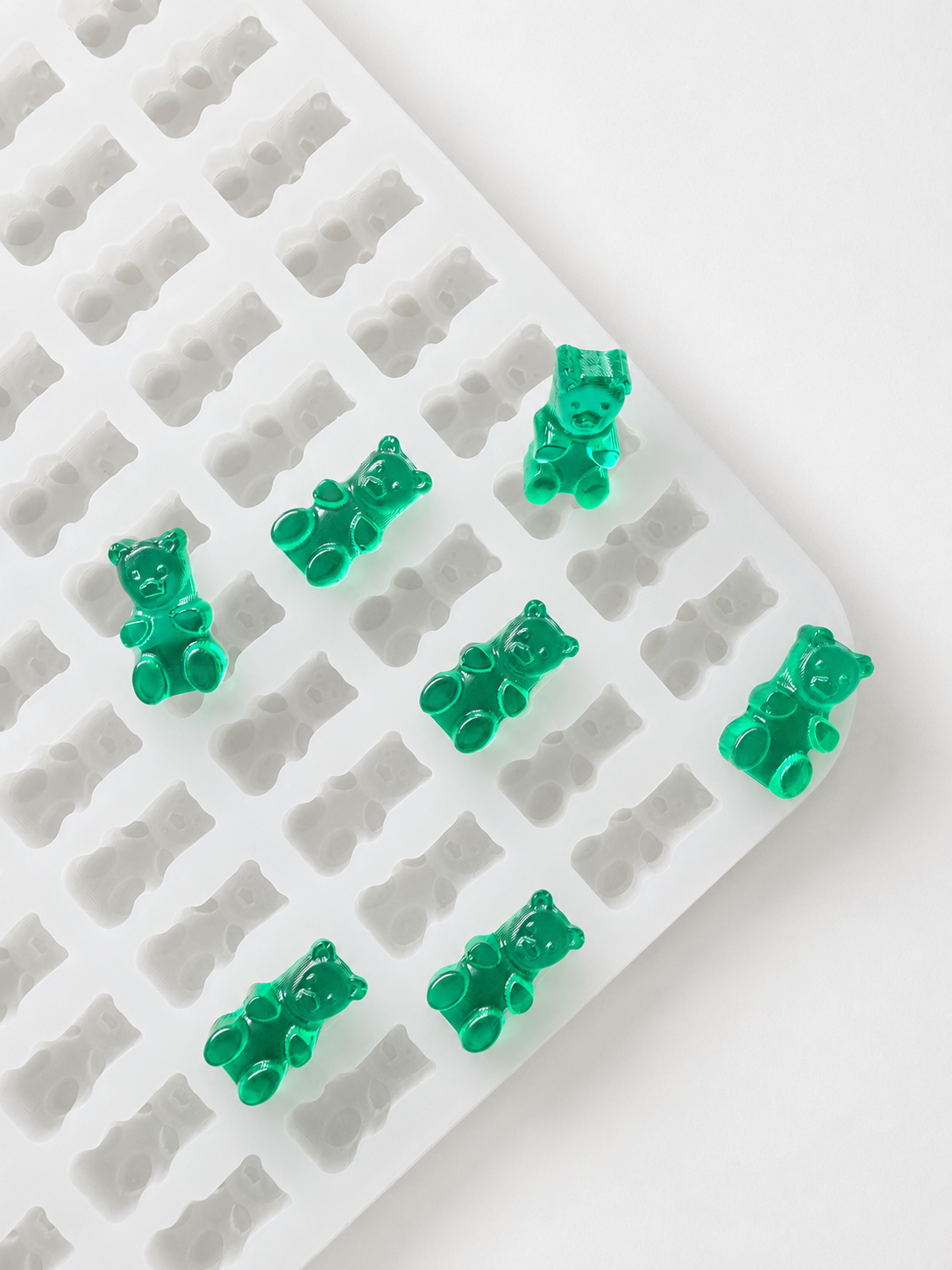
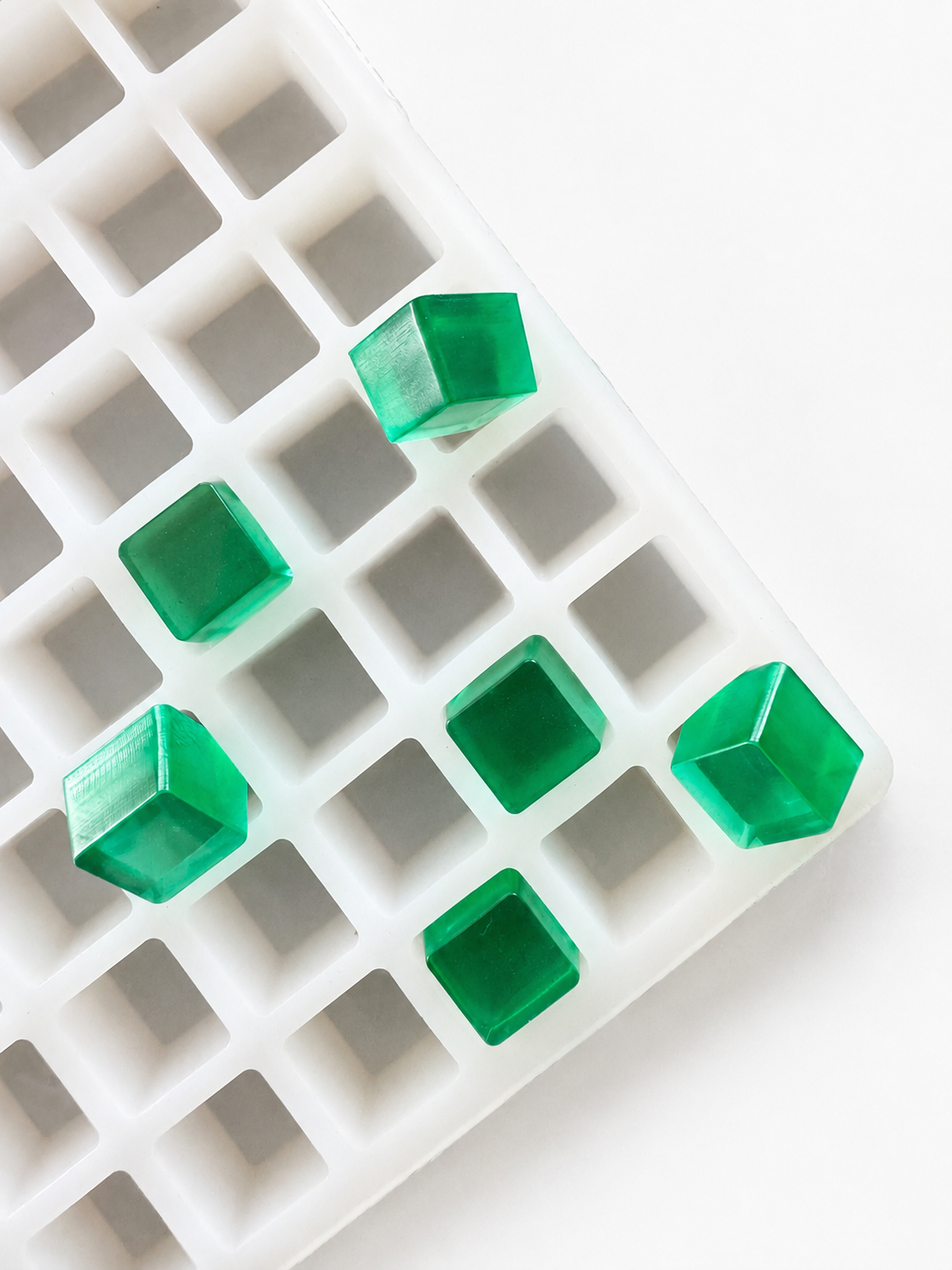
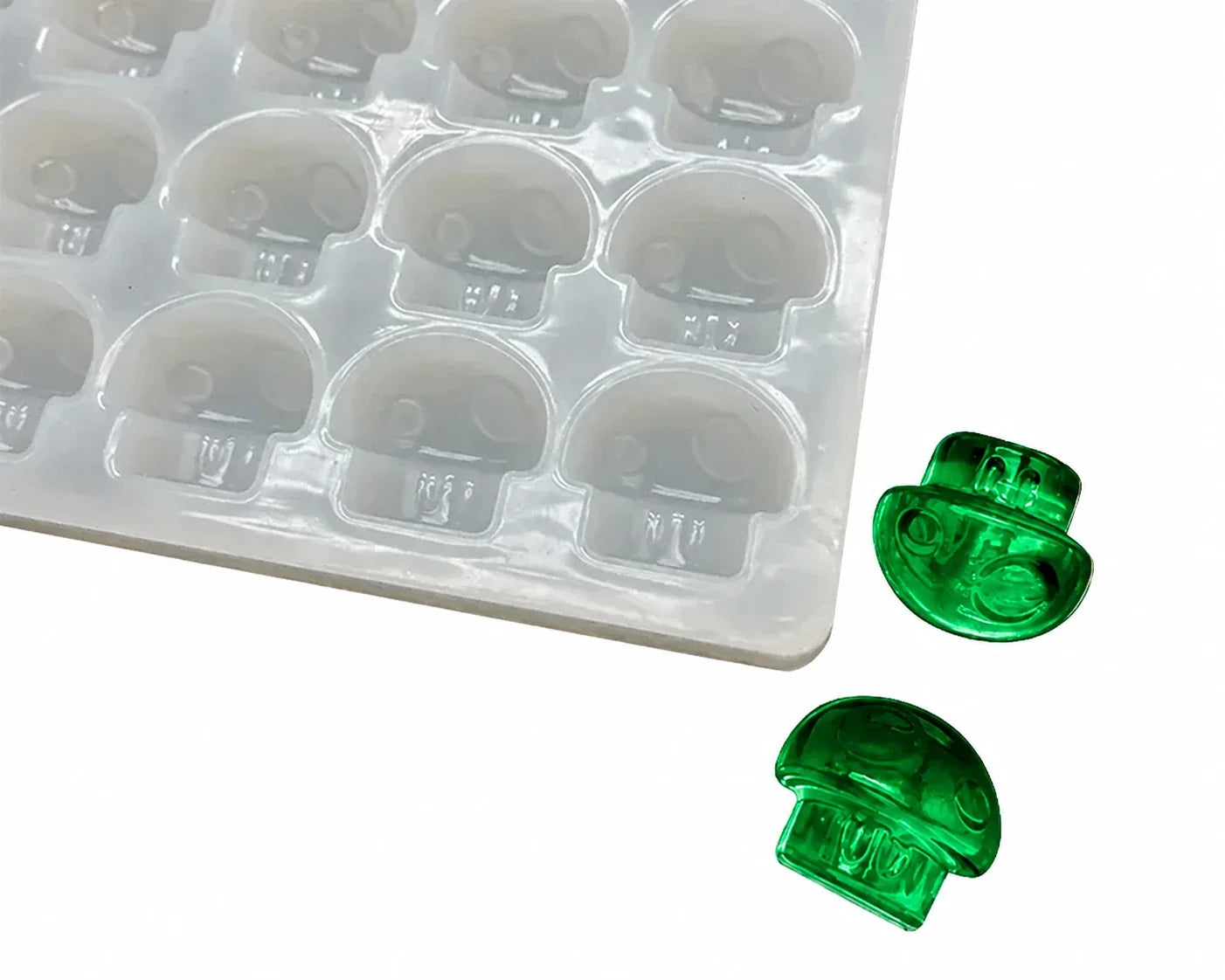
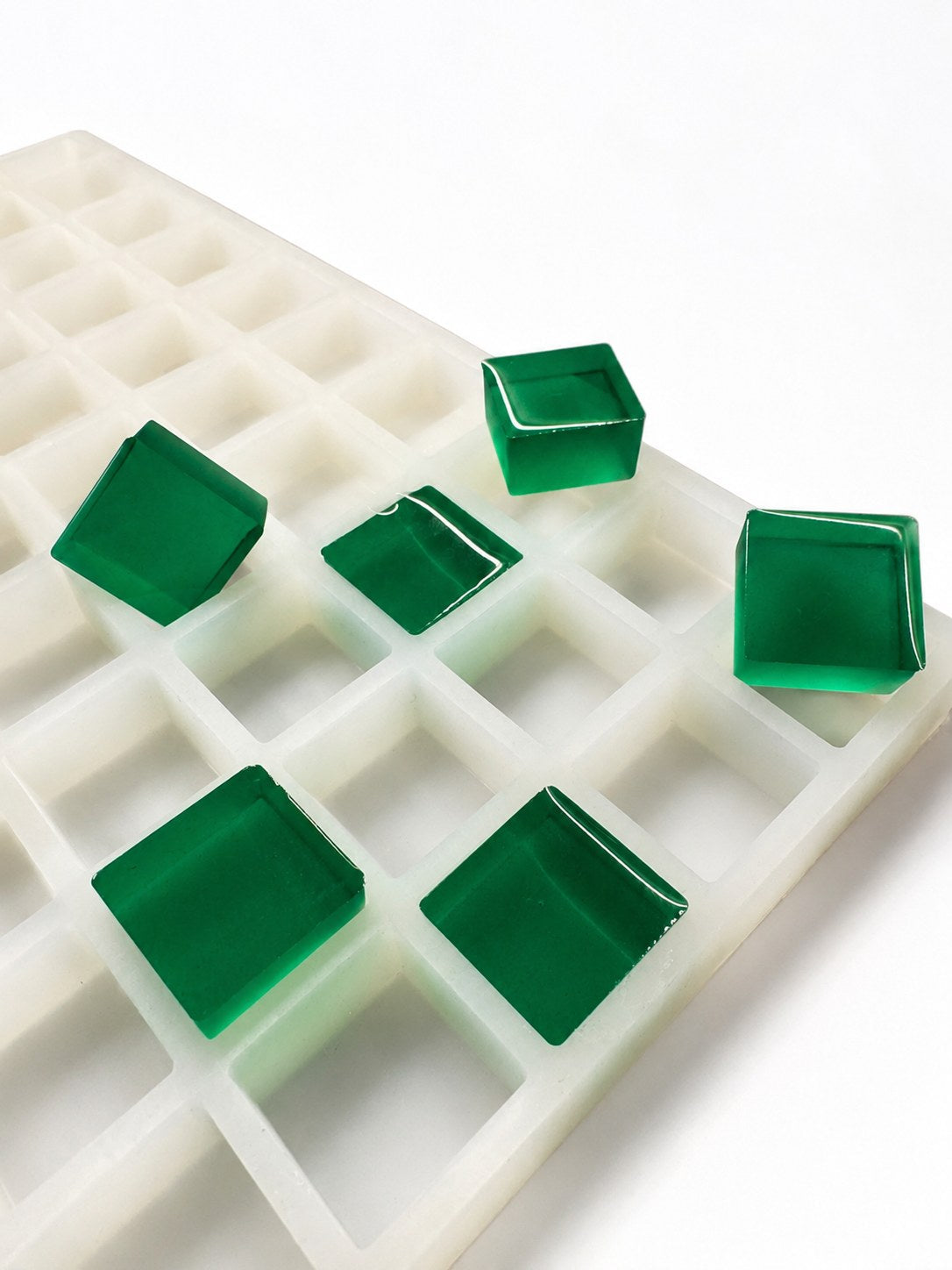
Use the commercial gummy mold size and production guide for deeper size planning, then estimate the required quantity with the gummy mold production calculator.
Who This Guide Is For
- Nutraceutical and supplement manufacturers
- Vitamin gummy brands
- Confectionery manufacturers
- Functional food companies
- Contract manufacturers
- Product developers and R&D teams
- Startup brands preparing for commercial production
- Established manufacturers expanding an existing line
1. Start With the Finished Product
A practical mold-selection process begins with the product you intend to sell. Before comparing shapes, define the target gummy size, approximate cavity volume, target finished weight, pieces per serving or package, desired output, filling method, packaging requirements, and launch timeline.
Your mold should support these goals rather than force the finished product into an unsuitable format.
2. Understand Cavity Volume and Finished Weight
Cavity volume and finished gummy weight are related, but they are not the same measurement. A 3mL cavity does not automatically produce a 3-gram gummy.
Finished weight can vary with formula density, solids content, gelling system, active ingredients, moisture loss, fill level, coatings, and processing conditions. Produce and weigh a test batch before establishing serving sizes, package counts, dosage calculations, or label claims.
3. Choose the Right Cavity Size
Smaller cavities generally create smaller pieces and may allow more cavities within a given mold footprint. Larger cavities create a more substantial piece but may reduce the number of cavities that fit within the same overall mold size.
Real examples from the Gummy Molds catalog include the 1.5mL Bear Mold, the 2.85mL Cube Mold, the 3.5mL Mushroom Mold, and the 6mL Square Mold. These examples show how cavity size and cavity count change across product formats, but finished weight still needs to be tested with the intended formulation.
4. Compare Cavity Count and Production Output
Cavity count determines the maximum number of pieces produced from one completely filled mold. It does not determine total production speed by itself.
Actual output also depends on the number of molds in rotation, filling speed, setting or cooling time, demolding, cleaning, drying, labor, rejected pieces, workspace, and tray handling.
Use the Gummy Mold Production Calculator to estimate molds required, pieces per cycle, batch yield, and production output.
5. Select a Shape That Works in Production
Shape affects branding, filling, demolding, packaging, and consumer perception. Simple geometric shapes such as cubes, squares, coins, cylinders, and half-spheres are often straightforward to evaluate for repeatable production. Bears, stars, fruit shapes, mushrooms, logos, and detailed designs may require closer attention to cavity depth, narrow details, draft, and release behavior.
Browse the commercial gummy mold collection to compare available shapes and cavity sizes.
6. Match the Mold to Your Filling Method
Hand Filling
Hand filling can be useful for formulation development, samples, pilot batches, and smaller production runs. It requires limited equipment but becomes increasingly labor-intensive as cavity count and daily output rise.
Flood-and-Scrape (Also Called Pour-and-Scrape)
Flood-and-scrape production can fill many cavities efficiently when the mold surface, cavity layout, formulation, temperature, and working time are suitable. Scraping technique and mold leveling affect consistency and waste.
Commercial Depositors
Do not assume that a mold is compatible with a depositor simply because it is described as commercial or depositor-compatible. Compatibility depends on overall mold and support-tray dimensions, nozzle count and spacing, cavity alignment, shot volume, machine clearance, indexing requirements, formula viscosity, operating temperature, and mold positioning.
When practical, test one mold or provide complete equipment specifications before committing to production quantities.
7. Understand Commercial Mold and Tray Formats
Commercial gummy molds are sold in several physical formats. The correct choice depends on your workspace, trays, racks, filling equipment, and production process.
Individual Silicone Molds
These are flexible molds sold as individual sheets or trays. They are useful for testing, hand filling, and smaller-scale production when their dimensions fit the user’s process.
Quarter-Sheet and Half-Sheet Formats
These terms describe common overall footprints, not a guarantee of universal equipment compatibility. Confirm the actual listed dimensions before purchasing trays, racks, or depositor tooling.
Full-Sheet and Large Production Formats
Larger footprints may increase total cavity count but require sufficient support, workspace, rack capacity, and handling clearance.
Tray-Supported Molds
Some production systems use a flexible silicone mold supported by a rigid tray or carrier. The support system helps with transport, alignment, and flatness, but the tray and mold must fit the specific workflow.
Universal and Equipment-Specific Layouts
Terms such as universal depositor compatible or equipment-specific should be treated as a starting point for verification, not as a guarantee. Confirm the depositor model, nozzle pattern, mold footprint, support tray, indexing, and shot requirements.
8. Choose the Correct Purchase Type
Ready-to-Ship Molds
Physically in-stock molds are generally the fastest option when an existing design meets your requirements. They are useful for product testing, smaller orders, replacement inventory, and immediate production needs.
Bulk Made-to-Order Molds
Bulk made-to-order listings provide an existing mold design in larger quantities. Review the included quantity, lead time, cavity count, dimensions, and equipment requirements before ordering.
Custom Gummy Molds
Custom molds are appropriate when a brand needs a proprietary shape, logo, target volume, specialized tray dimensions, a specific cavity layout, or an equipment-oriented design.
Review the custom gummy mold process or contact Gummy Molds with your project details.
9. Evaluate Material and Compliance Claims Carefully
Commercial buyers should review material descriptions and request supporting documentation when a specific food-contact, facility, or customer requirement applies. Terms such as food-grade, platinum-cured, BPA-free, temperature resistant, FDA compliant, or otherwise compliant should be supported by the applicable specification, test report, or supplier documentation.
A mold alone does not make a finished gummy compliant. Formula validation, sanitation, testing, labeling, licensing, packaging, dosage controls, and jurisdiction-specific rules remain the manufacturer’s responsibility.
10. Determine How Many Molds You Need
The correct mold quantity depends on more than the number of gummies in one batch. A production line may need molds simultaneously being filled, set, demolded, cleaned, dried, inspected, and held as backup inventory.
Plan around target pieces per batch or shift, cavities per mold, expected loss and rejection rate, setting time, number of cycles, cleaning rotation, and backup capacity.
11. Common Buying Mistakes
Mistake 1: Treating cavity volume as finished weight
Volume and weight are different measurements. Confirm finished weight through a test batch.
Mistake 2: Ordering too few molds
Include setting time, cleaning rotation, demolding, and backup inventory—not only pieces per fill cycle.
Mistake 3: Assuming equipment compatibility
Verify tray dimensions, cavity alignment, nozzle spacing, shot volume, clearance, and formula behavior.
Mistake 4: Comparing only the purchase price
A lower mold price does not necessarily create a lower production cost. Consider usable output, labor, filling efficiency, cleaning, lifespan, and interruptions.
Mistake 5: Scaling before testing
Validate the intended formula, filling method, demolding process, finished weight, and packaging fit before purchasing a full production quantity.
Commercial Gummy Mold Buying Checklist
- Confirm target cavity volume.
- Confirm cavity count per mold.
- Estimate finished weight through formulation testing.
- Determine the required number of molds.
- Verify mold and support-tray dimensions.
- Verify depositor compatibility when applicable.
- Confirm whether the product is physically in stock or made to order.
- Review the included quantity and lead time.
- Test the formula and filling method before scaling.
- Include backup molds in the production plan.
How This Guide Was Prepared
This guide was reviewed by Mitchel, Co-Founder at Gummy Molds. Product comparisons use cavity volume, cavity count, shape, and availability information published on the linked product pages. The production section uses real gummy-manufacturing footage to illustrate filling and scraping workflows.
The guide does not treat cavity volume as finished weight, does not guarantee depositor compatibility, and does not substitute for formula testing, equipment measurements, food-safety review, or jurisdiction-specific compliance work.
Manufacturers, editors, and procurement teams may reference this guide using its permanent URL: Commercial Gummy Molds Buyer’s Guide.
Frequently Asked Questions
What is the best gummy mold for commercial production?
The best commercial gummy mold is the one that matches the desired piece size, shape, formula, filling method, equipment, output target, and purchasing timeline. There is no single mold that is best for every manufacturer.
Does cavity volume equal gummy weight?
No. Finished weight depends on formulation density, ingredients, moisture loss, fill level, coatings, and processing. Produce and weigh a test batch.
How many gummy molds do I need?
Divide the required pieces per cycle by the cavities per mold, then account for fill loss, rejected pieces, setting time, cleaning rotation, and backup capacity.
Are all silicone gummy molds compatible with depositors?
No. Compatibility depends on mold and tray dimensions, nozzle spacing, cavity alignment, shot volume, machine clearance, indexing, formula viscosity, and operating settings.
Should I choose a stock mold or a custom mold?
Choose a stock mold when an existing shape, size, and layout meet the project and speed or lower initial cost matters. Choose a custom mold when proprietary branding, specialized dimensions, an equipment-specific layout, or a unique piece is central to the product.
Should I test one mold before placing a bulk order?
Testing is strongly recommended when equipment compatibility, formula behavior, finished weight, demolding, or packaging fit has not already been validated.
Choose Your Next Step
Need a mold that is available now?
Shop commercial gummy molds and review the availability shown on each product page.
Still planning production?
Calculate mold quantity and batch output before ordering.
Need a proprietary shape or layout?
Request a custom gummy mold or contact us with your project specifications.
Watch Real Commercial Gummy Production
Explore the Commercial Gummy Production Video Library for more real production footage. For deeper process examples, watch the commercial gummy mold filling process video and the pour-and-scrape gummy production video.
Choose the purchasing path that fits production
Compare available commercial molds, calculate the quantity required for your cycle, or begin a custom project for proprietary shapes and equipment-specific layouts.